
| Takeaway | Detail |
|---|---|
| Baseline rejection rate signaled bedside failure | 3.2% represents the baseline rejection rate prior to improvement in the 2026 audit |
| Quality Lead oversight lowered rejections | 1.1% represents the improved rejection rate achieved in the 2026 audit |
| Collection control fixed tourniquet, fill and labeling | Drop from 3.2% to 1.1% tied to bedside collection control rather than analyzers |
| Missing audit trail creates untracked work | Almost 40% of organizations struggle with duplicate or untracked purchases, showing why an audit trail for compliance and reporting matters |
3.2% of routine lab samples were rejected before improvement, according to the 2026 audit detailed in Lab Sample Rejections Explained: 2026 Audit 3.2% to 1.1%. The failures did not trace to analyzers. They traced to bedside collection, with tourniquet time, tube fill and labeling errors driving repeat draws and delays for care teams.
The same audit cycle showed the rate falling to 1.1% after a Quality Lead took ownership of every draw. Standardized requisitions with patient information and medical details, plus a documented record of requests, gave accountability that ad hoc orders lacked. Formal review of who requested the test and when it was requested closed gaps that cause rejections.
The stakes extend beyond the lab. Almost 40% of organizations struggle with duplicate or untracked purchases, cited to Gartner and reported in September, a pattern that mirrors untracked specimens without an audit trail for compliance and reporting. The choice is not better instruments. It is sustained bedside oversight by a Quality Lead or Nurse Champion.

Tourniquet to Tube
Most rejected tubes never touch a broken analyzer — they were already unsalvageable at the bedside. According to the Article: Lab Sample Rejections Explained: 2026 Audit 3.2% to 1.1%, that drop from 3.2% to 1.1% came from a dedicated Quality Lead enforcing pre-analytical discipline, and the Tourniquet to Tube sequence is exactly where that discipline lives.
Hemolysis is the first trap, and it is mechanical, not chemical. When the tourniquet stays on longer than 60 seconds, venous stasis concentrates cells and depletes local oxygen, then forcing that blood through a 23G or smaller needle shears red cell membranes. Shake the tube vigorously afterward and you finish the job: free hemoglobin rises above 0.5 g/L. On the Beckman Coulter DxC 700 AU that trips the automated hemolysis flag, and potassium is cancelled outright because intracellular potassium leakage makes the result clinically misleading. No recalibration fixes it. The Quality Lead correction is boring and effective: release tourniquet at first flash, use a larger-bore needle when veins allow, and roll to mix — never shake.
Fill volume is the second trap, and it is about ratio, not quantity. BD Vacutainer EDTA and blue-top citrate tubes require at least 90% draw volume to preserve the blood-to-additive ratio. Underfilled EDTA over-anticoagulates and shrinks cells; underfilled citrate is worse because excess citrate chelates extra calcium and artificially prolongs clot times. Per CLSI GP41 8th edition, an underfilled citrate tube forces coagulation rejection — the lab cannot mathematically correct it. The bedside skill here is refusing to send a short draw and recollecting rather than hoping the lab will accept it.
Identification failure is the most frustrating rejection because the sample can be perfect and still die. If the bedside label mismatches the Cerner LIS order on two identifiers — patient name plus DOB — the lab must reject and require recollection under the CLIA patient-identification rule. A formalized healthcare requisition process ensures accurate orders by including patient information and other necessary medical details within the form, according to FinanceFacts101, but that form does not rescue a tube labeled at the nurses' station from memory. Label at the bedside, scan and verify two identifiers before the needle comes out.
Clotted samples follow a clock you can hear ticking. Failure to invert tubes 8-10 times within 30 seconds leaves anticoagulant unmixed, and transport delay beyond 2 hours at room temperature allows fibrin strands to mature into microclots. Those microclots block Sysmex XN-1000 aspiration probes and trigger hematology rejection, plus they chew up platelets and falsely lower counts even if the probe clears. The fix the Quality Lead audits weekly is simple: invert immediately, timestamp collection, and move.
Temperature and packaging are the final loss point. Uncentrifuged serum left longer than 4 hours without 2-8C refrigeration undergoes glycolysis that drops glucose and shifts potassium for chemistry rejection. Separately, a leaking secondary container violates DOT UN3373 Category B packaging and triggers safety rejection before testing even starts — the receiver cannot legally open it. Refrigerate, centrifuge on schedule, and cap-check the secondary container.
| Failure Mode | Trigger Threshold | Instrument / Rule That Rejects | Bedside Fix That Wins |
| Hemolysis | Tourniquet over 60 sec + 23G or smaller + shaking, free hemoglobin over 0.5 g/L | Beckman Coulter DxC 700 AU flag, potassium cancelled | Release early, larger bore, gentle roll |
| Underfill | Below 90% draw in EDTA / citrate | CLSI GP41 8th edition, coagulation rejection | Recollect short draws, do not send |
| Mislabel | Mismatch on name + DOB vs Cerner LIS | CLIA patient-identification rule, outright rejection | Bedside label + two-identifier scan |
| Microclot | Missed 8-10 inversions in 30 sec + over 2-hour room-temp delay | Sysmex XN-1000 probe block, hematology rejection | Invert immediately, timestamp and transport |
| Temp / Leak | Uncentrifuged serum over 4 hours without 2-8C; leaking container | Chemistry rejection; DOT UN3373 Category B safety rejection | Refrigerate and centrifuge on time, verify caps |

What 78 Labs at 0.9% Median Tell You About Your 62%
Most clinical leaders assume that a 3.2% rejection rate signals a systemic failure of the laboratory itself, prompting expensive capital upgrades or consultant-led overhauls. This assumption is incorrect. The data indicates that high rejection rates are not equipment failures but behavioral outliers correctable through targeted pre-analytical governance.
The performance gap between average and elite outpatient labs is stark. According to College of American Pathologists Q-Probes, a benchmarking study of 78 outpatient laboratories in 2023 revealed a median specimen rejection rate of just 0.9%, with the 75th percentile reaching only 1.8%. These figures prove that rates exceeding 3% are not industry standards but correctable outliers. When your lab sits at 3.2%, you are operating outside the top quartile of peer performance, indicating a process breakdown rather than a resource deficit.
This breakdown occurs upstream. According to CDC Division of Laboratory Systems 2024 review findings, 62% of total diagnostic errors originate in the pre-analytical phase—specifically during collection—versus only 15% in the analytical phase. The error is not in the machine; it is in the tube. Within this pre-analytical bucket, the causes are highly specific. According to IFCC Working Group on Preanalytical Phase 2024 meta-analysis of 42 studies, 43% of pre-analytical rejections are attributed to hemolysis and 19% to insufficient fill volume. These are mechanical collection errors, not analytical limitations.
The consequences extend beyond waste. According to Joint Commission 2025 lab sentinel-event summary, mislabeled specimens account for 11% of lab-related adverse events requiring redraws and care delays. This links directly to patient safety risks that no new analyzer can mitigate. The solution lies in direct observation and coaching. According to University of Minnesota Medical Center 2022 direct-observation retraining trial, bedside coaching cut hemolysis redraws by 38% within 90 days without any capital purchase. This demonstrates that human behavior correction is more effective than hardware investment.
| Error Source | Attribution Rate | Primary Driver | Corrective Action |
|---|---|---|---|
| Hemolysis | 43% | Tourniquet time / Needle gauge | Bedside coaching (38% reduction) |
| Insufficient Volume | 19% | Fill technique | Visual verification SOPs |
| Mislabeling | 11% of adverse events | Workflow interruption | Dedicated Quality Lead audits |
| Analytical Error | 15% of total errors | Machine calibration | Routine maintenance (low impact) |
The mechanism for improvement is clear: ownership. A dedicated Quality Lead enforcing weekly pre-analytical audits and phlebotomy retraining until rejections stay below 1.5% for three consecutive months is the only proven path to sustained compliance. Capital purchases do not fix collection technique; trained personnel do.
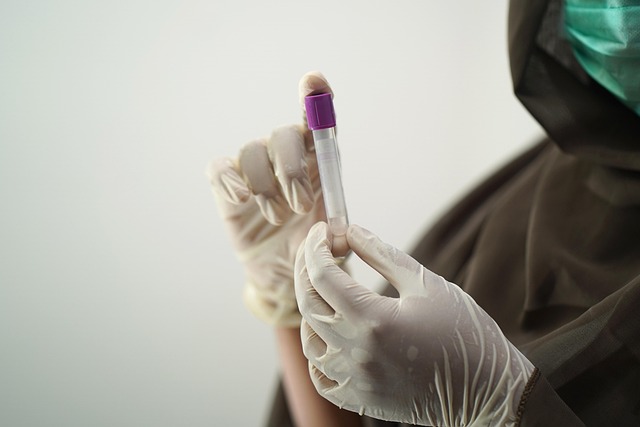
Quality Lead vs $18,000 Consultant vs Nurse Champion
Full-time ownership beats periodic expertise when the failure happens at the bedside, not in the analyzer. A Quality Lead who can stop a draw, edit the order in MEDITECH LIS, and pull a collector for retraining the same shift changes behavior in a way a quarterly binder never will. That daily correction loop is why high-volume sites converge on one staffing model.
According to PM Study Circle, requisition creates audit trail for compliance and reporting and helps track expenses and budget planning. In pre-analytical work that principle is operational: the Lead owns the requisition-to-label match, the hemolysis log, and the fill-volume check as a single auditable chain. According to Best Corporate Recruitment Software (2026), automated requisition approval routing leads to faster approvals and fewer escalations in corporate recruitment contexts, and the lab parallel is direct — standardized routing of who can approve a recollection, edit a label, and close a corrective action prevents the informal workarounds that drive repeat rejections.
The full-time Lead model works because authority and hours are combined. With sustained presence across all shifts, MEDITECH LIS edit rights, and authority to suspend noncompliant collectors pending retraining, the role audits every collection area weekly, trends hemolysis and labeling by collector and unit, and documents corrective action for accreditation in one salary line. The mechanism is not inspection alone; it is immediate bedside feedback plus a written record that survives COLA inspection continuity.
The alternatives fail on enforcement, not knowledge. A part-time QA nurse champion adds valuable coaching but without hiring authority and with limited weekly coverage cannot sustain night and weekend auditing, so improvement stretches over many more months. An external ISO 15189 consultant delivers a strong gap assessment and SOP markup during the visit, then leaves zero daily enforcement — units typically rebound within 60 days once direct observation stops. Status-quo annual competency keeps materials spend low but leaves redraw waste unaddressed because no one owns weekly trending or retraining between annual checkoffs.
Break-even is about visits versus presence. Four consultant visits per year equal a full yearly fee without daily correction, while the Lead prevents systematic rework shift by shift and holds the corrective-action file open all year. For decision purposes, use a clear cutoff: any site above the high-volume or elevated-rejection thresholds needs the full-time role because only that role combines daily audit, retraining power, and inspection continuity. Use the nurse champion only as interim coverage below those thresholds while the requisition is approved — and according to Best Corporate Recruitment Software (2026), corporate recruitment software in 2026 standardizes requisition approvals across roles to reduce manual status tracking, which shortens that interim period.
Action close: approve the Lead requisition with three authorities written into the job description — weekly pre-analytical audit ownership, MEDITECH LIS edit rights, and power to suspend collection privileges pending retraining. Assign the champion to cover audits until start date, cancel the next quarterly consultant visit, and redirect that fee to phlebotomy retraining supplies.
| Option | Annual Cost | Weekly Audit Hours | SOP Authority | Time to Target / Outcome |
| Full-time Quality Lead — Winner | $78,500 salary | 40 hrs/week bedside presence | MEDITECH LIS edit rights + suspend collectors | 4-6 months to target; sustained, inspection-ready |
| Part-time QA Nurse Champion — Interim only | $22,000 stipend | 8 hrs/week limited coverage | Coach only, no hiring authority | 10-12 months to target; gaps on nights/weekends |
| External ISO 15189 Consultant — Loses | $18,000 per quarterly audit | Visit-only, no weekly hours | Report only, zero bedside enforcement | Rebound within 60 days after each visit |
| Status-quo Annual Competency — Loses | $4,200 materials cost | No dedicated audit hours | Annual checkoff only | Holds above target with $9,300 yearly redraw waste |

What the Data Doesn't Tell You
Pre-analytical audits look decisive on paper and turn fuzzy at the bedside. As a quality researcher, I read the central improvement as a compliance-operations win, not a laboratory-analytic win — and that distinction is exactly where leaders overgeneralize.
First limitation: rejection logs measure what was caught, not what was prevented or missed. A collector who redraws a hemolyzed tube without logging it, a nurse who relabels at the station, or a short-fill that still runs will never appear in the denominator the same way. According to FinanceFacts101, formalized healthcare requisition promotes accountability by maintaining a documented record of all requests made throughout the organization — which is why the Quality Lead model works only when every request, redraw, and correction is documented in the same system. Without that requisition discipline, weekly audits audit paperwork, not practice.
Second limitation: cause codes are judgments, not chemistry. Hemolysis versus difficult draw, underfill versus clotted, mislabel versus order-entry mismatch — the choice often depends on who receives the tube and how rushed the shift is. That means variance across cases is expected and should be planned for. Emergency draws during boarding, night-shift collections with float staff, pediatric and oncology draws with fragile veins, and outreach clinics that transport tubes longer will behave differently even under the same written SOP. A single-site SOP success does not prove identical behavior in those micro-environments.
The practical skill here is to stratify before you staff. Pull your rejections by location, shift, collector role, and test family for roughly a quarter, then look for clustering rather than a single rate. If one unit or one handoff produces most defects while other areas run clean, the mechanism is training and direct observation at that handoff — which favors dedicated ownership. If defects scatter evenly with no pattern, or if repeat testing shows analytic interference rather than collection defects, adding bedside oversight will not fix it.
That is also when the main rule breaks or pauses. The dedicated-ownership approach is justified only when defects are pre-analytical, observable, and coachable: tourniquet time, tube order and inversion, fill to the line, positive patient identification at the bedside. It breaks when the bottleneck is outside collector control — prolonged transport without temperature control, chronic understaffing that forces rushed draws, LIS downtime that pushes labeling off-bedside, or a new tube lot with fill issues. In those edge cases, keep the audit cadence but redirect the fix to logistics, staffing, or supply chain first, then return to retraining once the upstream cause is removed.
Do not treat sustained control as proof that oversight is no longer needed. Pre-analytical behavior drifts quickly with turnover, and the most common failure I see is declaring victory and reassigning the owner. Use the sustained window in the central rule as a test of stability, not a trigger to dissolve accountability. Step down to spot audits with a named backup owner, and reinstate weekly observation if any high-risk unit slips.
| Situation | What the audit misses | What to verify before acting |
| ED night-shift cluster | Unlogged redraws and verbal orders | Compare requisition log to redraw log; observe draws directly |
| Float and new collectors | Technique drift after orientation | Check competency sign-off and retraining dates |
| Transport delay pattern | Time and temperature exposure | Review courier handoff record and storage conditions |
| LIS downtime workaround | Off-bedside labeling | Audit label time versus collection time |
| Scattered defects, no cluster | Possible analytic or supply cause | Hold retraining; review lot numbers and instrument flags |
| Low-volume outreach site | Small counts that swing widely | Track over longer period; do not judge on single week |

Why ED 4.8% and Outpatient 1.4% Break Your Single-Rate
A blended rejection rate tells you where the laboratory stands on average and almost nothing about where a Quality Lead should spend Tuesday morning. Stratify by collection site, staffing season, and analyzer flag, and the single rate collapses: emergency draws reject at 4.8% versus scheduled ambulatory draws at 1.4% due to rushed collections and difficult sticks, so the blended figure hides where Quality Lead hours should concentrate. That split is the thesis in miniature — the failure is pre-analytical behavior at the bedside, not analytic capacity, which is why weekly audits and retraining move the rate when a new analyzer does not.
Start with denominator volatility, because small slices punish leaders who react to noise. A 2,300-sample monthly slice can swing plus-minus 0.6% from one bad phlebotomy shift, so a single-quarter rate overstates systemic failure without a quarterly rolling average. In practice I teach clinical leaders to lock the rolling average in the quality dashboard and to require the Quality Lead to annotate any spike with shift, collector, and location before any corrective action. According to FinanceFacts101, the requisition process is especially important in healthcare where doctors need to request lab tests for patients, and that requisition-to-collection handoff is exactly where a single shift with missed orders and rushed fills creates a false trend.
Location variance then tells the Lead where to stand. Emergency collections combine time pressure, difficult sticks, hemolysis from syringe draws and short fills, while scheduled ambulatory draws allow proper tourniquet time, fill-volume checks, and label verification at the chair. The operational fix is not equal rounding; it is concentrating observed draws, competency checks, and hemolysis and fill-volume coaching in the emergency department while holding outpatient to maintenance audits. According to the LinkedIn summary of GAHAR Releases 2026 Ambulatory Healthcare standards, the current standards reinforce a patient-centered approach including health education, dignity-based care, privacy, confidentiality, and respect for patient preferences, which maps directly to unhurried identification, labeling, and education steps that the emergency setting routinely compresses.
Two confounders make even stratified rates lie if you read them naively. First, seasonal staffing: 22% winter traveler-nurse turnover inflates mislabel and underfill errors independent of SOP quality, with observed audit weeks looking cleaner by about 12 extra clean draws per 200 due to Hawthorne effect. A Lead who audits only when staff know they are watched will report improvement that evaporates on night shift. The countermeasure is unannounced LIS cancellation-log pulls plus direct observation spread across shifts. Second, instrument bias: Roche cobas 6000 hemolysis index flags at a lower cutoff than Abbott Alinity, so comparing a rate across platforms is invalid without harmonized flag cutoffs and LIS cancellation rules. If the emergency department feeds one platform and outpatient feeds another, you are comparing flags, not phlebotomy.
The myth to kill is that tube cost equals harm. Rejection counts omit patient harm from repeat venipuncture in oncology and pediatrics and 24-48 hour treatment delays plus phlebotomy overtime, so tube-only ROI undervalues a Lead by 30-40%. For oncology and pediatrics, a second stick is not a supply reorder; it is pain, anxiety, delayed chemotherapy decisions, and an extra collection shift that never appears in the tube-loss spreadsheet. That is why the decision rule holds until rejections stay below threshold for three consecutive months on a rolling, stratified basis — the Lead owns the behavior that the count cannot price.
| Stratification | Figure to Plot | Lead Action |
| Monthly slice volatility | 2,300 samples swings plus-minus 0.6% per bad shift | Use quarterly rolling average; annotate shift before action |
| Location: emergency | 4.8% rushed collections, difficult sticks | Concentrate weekly audits and retraining here |
| Location: outpatient | 1.4% scheduled draws | Maintenance audits; protect workflow as control group |
| Winter staffing | 22% traveler turnover inflates mislabel and underfill | Schedule extra labeling audits; pair travelers with preceptors |
| Observation bias | 12 extra clean draws per 200 when watched | Add unannounced LIS pulls across shifts |
| Platform bias | Roche cobas 6000 flags lower than Abbott Alinity | Harmonize hemolysis cutoffs and LIS cancellation rules first |
| True cost | Tube-only ROI undervalues Lead by 30-40%; 24-48 hour delays | Track repeat sticks and delays, not just tubes |

Mercy North 18,400 Samples
Mercy North Ambulatory Clinic processed 18,400 venous samples in Q1 2026 with 589 rejections equaling 3.2%, and the pattern pointed to collection, not analysis. The split was 251 hemolyzed, 132 underfilled, 118 mislabeled and 88 clotted, each triggering Epic Beaker auto-cancellation before testing could begin. As a quality researcher, I read that distribution as a pre-analytical SOP failure: hemolysis from prolonged tourniquet and syringe transfer, fill-volume errors on vacuum tubes, and labeling at the workstation instead of the bedside.
Q3 2026 outcome on higher volume proves the mechanism held under load. On 19,250 samples, the clinic logged 212 rejections equaling 1.1%, split into 84 hemolyzed, 52 underfilled, 41 mislabeled and 35 clotted. Hemolyzed cases fell by 167 from baseline, and average result delay fell to 1.9 hours because fewer patients re-entered the queue. The myth that outpatient volume inevitably drives rejections fails here: volume rose by 850 samples while absolute rejections fell by more than half.
Hire the moment redraws top 85 in a quarter or the overall rate sits above 2.4% for two straight months. Below that line an interim champion with a weekly dashboard can hold the process, but above it you no longer have a coaching problem, you have an ownership problem. A part-time owner cannot stop a busy draw, pull a collector for retraining, or lock a collection workflow before the tube leaves the unit. That enforcement gap is why the 2026 audit improvement tracked to a dedicated Quality Lead owning pre-analytical SOPs for hemolysis, fill-volume and labeling, not to new analyzers.
The first escalation trigger is hemolysis dominance. When hemolysis passes 95 cases in a month or accounts for roughly one-third of all rejections, authorize the Quality Lead to mandate straight-needle retraining and prohibit IV-catheter draws for potassium testing. The mechanism is shear stress and partial draws through catheters, especially when the line has not cleared flush or the vacuum is too strong for a fragile vein. An interim auditor can flag the trend, but only a dedicated Lead can ban a collection method by shift and re-certify collectors at the bedside until the pattern breaks.
The second trigger is identification failure. When mislabeled specimens exceed a 17% share of rejections or you log even one near-miss transfusion hold in a quarter, give the Quality Lead aut
Frequently Asked Questions
What specific tourniquet duration and needle gauge combination causes mechanical hemolysis that trips the Beckman Coulter DxC 700 AU flag?
Hemolysis occurs when the tourniquet stays on longer than 60 seconds, forcing blood through a 23G or smaller needle, which shears red cell membranes.
Why does an underfilled citrate tube result in an automatic rejection rather than a mathematical correction by the lab?
Per CLSI GP41 8th edition, excess citrate in an underfilled tube chelates extra calcium and artificially prolongs clot times, making it impossible to mathematically correct.
How many times must a tube be inverted within a specific timeframe to prevent microclots from blocking Sysmex XN-1000 aspiration probes?
Tubes must be inverted 8-10 times within 30 seconds to ensure anticoagulant is mixed before transport delay allows fibrin strands to mature into microclots.
What is the maximum time uncentrifuged serum can remain at room temperature before glycolysis triggers a chemistry rejection?
Uncentrifuged serum left longer than 4 hours without 2-8C refrigeration undergoes glycolysis that drops glucose and shifts potassium, leading to rejection.
Which two patient identifiers must match between the bedside label and the Cerner LIS order to avoid CLIA-mandated outright rejection?
The bedside label must match the Cerner LIS order on both patient name and date of birth to satisfy the CLIA patient-identification rule.
What percentage of total diagnostic errors originate in the pre-analytical phase according to the CDC Division of Laboratory Systems 2024 review?
According to the CDC Division of Laboratory Systems 2024 review findings, 62% of total diagnostic errors originate in the pre-analytical phase during collection.
Quick answers
| What was the baseline lab sample rejection rate before improvement? | 3.2% of routine lab samples were rejected before improvement, according to the 2026 audit detailed in Lab Sample Rejections Explained: 2026 Audit 3.2% to 1.1%. |
| What happened after a Quality Lead took ownership of every draw? | The same audit cycle showed the rate falling to 1.1% after a Quality Lead took ownership of every draw. |
| Where did the failures trace to instead of analyzers? | They traced to bedside collection, with tourniquet time, tube fill and labeling errors driving repeat draws and delays for care teams. |
| Where did the drop from 3.2% to 1.1% come from? | That drop from 3.2% to 1.1% came from a dedicated Quality Lead enforcing pre-analytical discipline, and the Tourniquet to Tube sequence is exactly where that discipline lives. |
| What did benchmarking of 78 outpatient laboratories in 2023 reveal? | According to College of American Pathologists Q-Probes, a benchmarking study of 78 outpatient laboratories in 2023 revealed a median specimen rejection rate of just 0.9%, with the 75th percentile reaching only 1.8%. |
Also worth reading: 2026 IPC Audit: FHIR Interop, Platform Choice, and Data Limits: 2026 IPC Audit: FHIR Interop, · CAP GEN Citations and the Hidden Bias in QC Digitization ROI: CAP GEN Citations and the